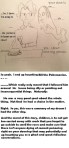
Hello Bill, I was hoping to get your advice on something. Recently, our old family Liepard passed away. Like any death of a beloved pet, this has affected us greatly. But my nine-year-old daughter in particular is having a hard time moving on after this. How can I help her get past Liepard’s death and prepare her for her first Pokemon in the coming months?

Grief is a difficult topic, and when it comes to dealing with it, what works for some people might not work for everyone. Still, these tips may help:

  • If you haven’t already, let your daughter hold a funeral for your liepard. Let her choose how the ritual should go and what should be said. Rituals can provide closure, and letting her lead will make the goodbye personal.
  • Be actively involved with her. Talk to her about how she feels. Participate in the things she’s doing to work through her grief. Offer suggestions for activities she can do that will acknowledge (not help her ignore or forget) her feelings. Taking an active role gives her the support she’s looking for, and making it clear you want to give her the space to express herself and work through her emotions as she sees fit (so long as they’re not destructive) gives her safety.
  • Of course, also give her space if she needs it. Don’t force her to interact with you if she wants to be alone. On the other hand, step in if you see signs of self-destructive behavior or anxiety. Consider having her speak to a child therapist if she’s struggling (but only do this if she really does look like she’s in trouble).
  • You may also wish to give her media that deals with death and loss to give her stories and characters to identify with. (Having a character to identify with can be a great comfort to children.) I admit I don’t have too many recommendations on-hand, but I’ve heard that Starfall (a middle grade novel about a girl and her minior) has gained popularity among preteens and teens for this reason.
  • Above all else, give her time. Death is difficult to deal with sometimes, and so long as you’re supportive but give her the means to work through how she feels, she’ll heal eventually.
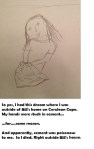
The Gothita Line

Gothita
The Fixation Pokémon
Type: Psychic
Official Registration #: 574
Entry: A small, child-like pokémon first discovered in the grasslands and forests of Unova. These strange pokémon use their ribbon-like feelers to increase their psychic powers, which they in turn use to observe people and pokémon at every waking hour of the day. However, when its eyes widen and its ribbons sway as if blown by the breeze, it is said that the gothita is actually staring at something only its kind can see. What, exactly? Well, readers, considering the fact that they’re notoriously morbid pokémon who constantly observe the living, one can only guess that it is perhaps not the warm aura of love and happiness projected by a trainer and their team.

Gothorita
The Manipulate Pokémon
Type: Psychic
Official Registration #: 575
Entry: The evolved form of gothita, by battle experience. According to many old tales, gothorita create friends for themselves by using their hypnotic powers to control children on starry nights, when the starlight increases their celestial-based powers. This is a gross misconception. Gothorita are not nearly as selective with their victims, they don’t puppeteer humans on only starry nights, and how dare anyone have the audacity to think otherwise.

Gothitelle
The Astral Body Pokémon
Type: Psychic
Official Registration #: 576
Entry: The evolved form of gothorita, by battle experience. Extremely talented in divination and precognition, all gothitelle possess the ability to see into the future by observing the movement and positions of stars and other celestial bodies in the night sky. Upon first meeting with a human, a gothitelle will typically determine their future the first night they get. Humans can tell when a gothitelle has successfully determined their life span when the gothitelle bursts into tears when they next meet. Whether or not that indicates that the human is due to die sooner or later is still a matter of scientific debate.

Phantump and Trevenant

Phantump
The Stump Pokémon
Type: Ghost/Grass
Official Registration #: 708
Entry: This small spirit pokémon is actually a stump possessed by the soul of a child who died while lost in a forest. In light of this, the author once attempted to convince the Pokémon Association to ban the use of this pokémon in battles … until it was found out that in many cases, this is a dream come true for the child-turned-phantump, and to make a long story short, the author spent the next few weeks questioning his life decisions and the world as a whole.

Trevenant
The Elder Tree Pokémon
Type: Ghost/Grass
Official Registration #: 709
Entry: The evolved form of phantump, via trading. Using its roots as a nervous system, trevenant has the power to tap into and manipulate the trees around it. It most often uses this ability to trap those who harm the forest, but every so often, it traps and confuses children as well, who subsequently die and become phantump. Because no one is more brutal towards children than the spirits of other children, apparently.


On the other hand, in order for you to die on my front lawn, you would also have to be ignored by a certain gym leader who apparently has enough free time on her hands to designate my property as the most romantic spot in Kanto.

Not to deflect any potential blame, of course.

Lileep and Cradily

Lileep
The Sea Lily Pokémon
Type: Rock/Grass
Official Registration #: 345
Entry: This ancient pokémon thrived at the bottom of prehistoric oceans by anchoring itself to a rock and ensnaring prey with its flower-like tentacles. It became extinct over 100 million years ago, largely due to the fact that being a stationary marine pokémon in a region where one active legendary can evaporate the ocean by taking a leisurely stroll through the general vicinity was perhaps a bad evolutionary idea.

Cradily
The Barnacle Pokémon
Type: Rock/Grass
Official Registration #: 346
Entry: The evolved form of lileep, by battle experience. As a step up from its preevolved form, cradily developed both the ability to walk and the ability to do so on land. Although one would think this would enable it to survive past the Cretaceous Era, cradily’s extinction was largely due to two major issues. First, its body, which was heavy enough to anchor it to the ocean floor, was not very well-equipped for chasing down prey. Second and more importantly, it has been scientifically proven that it’s rather difficult to survive when your children die in a mass extinction.